
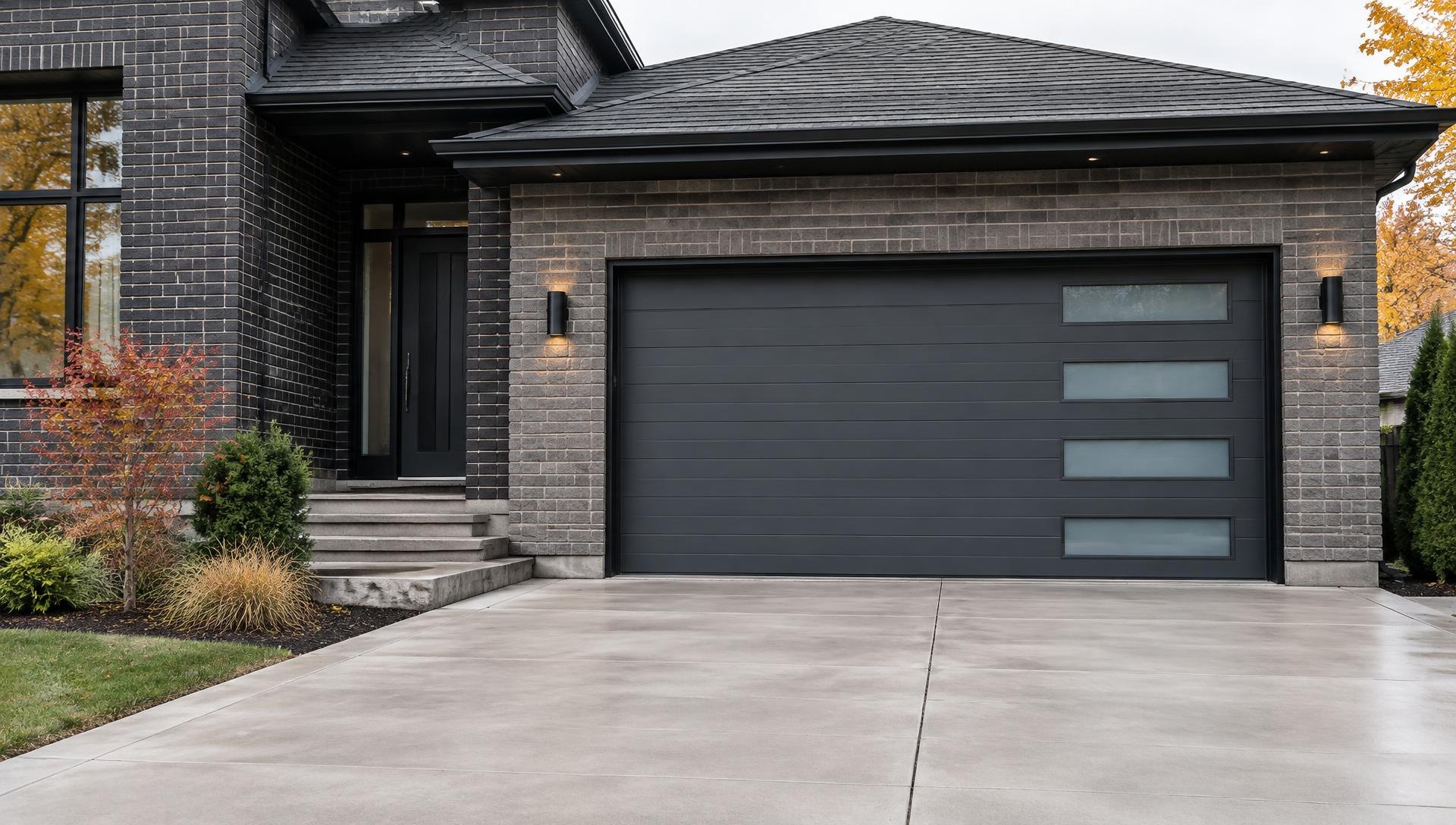
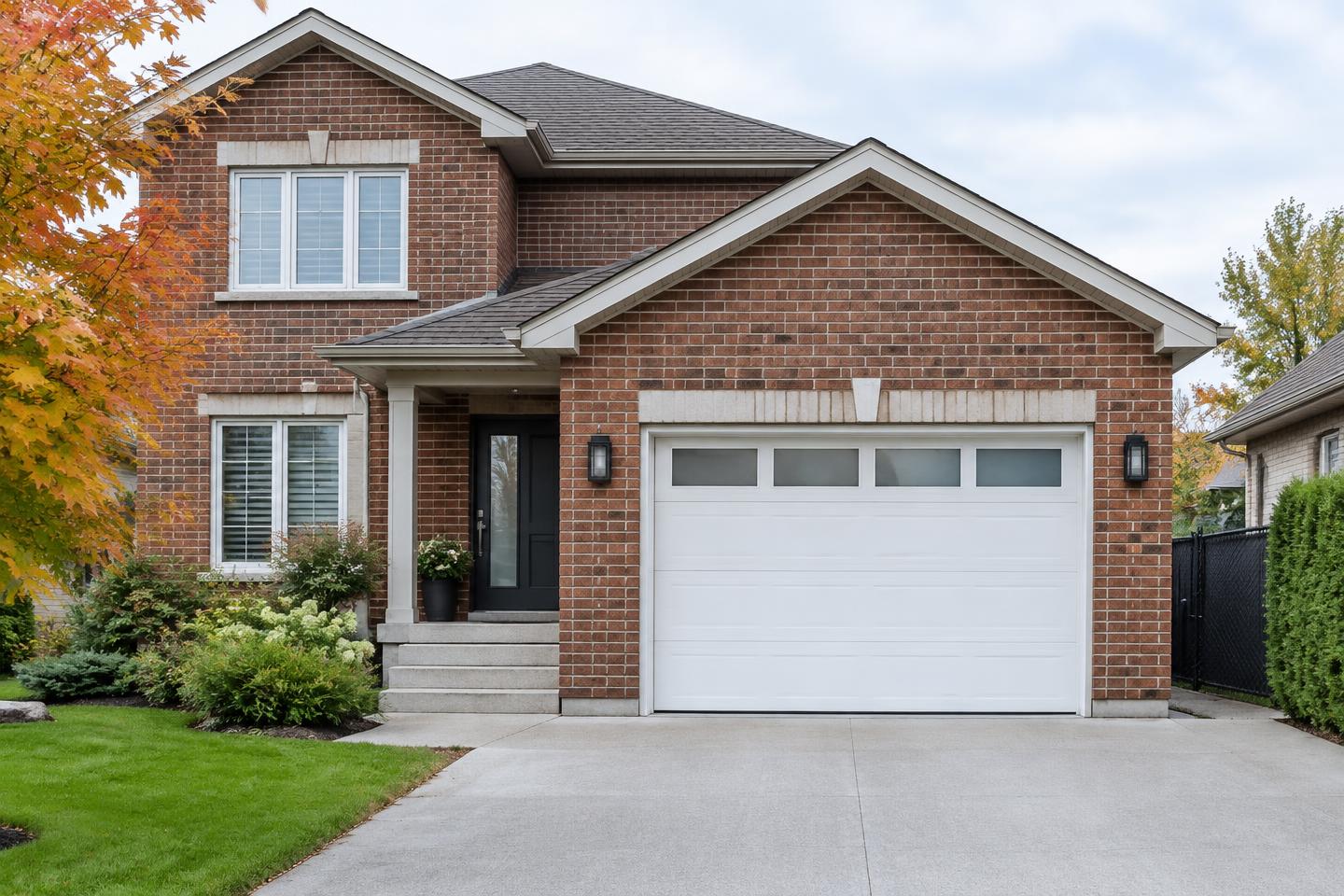
Look for gaps with the door closed
From inside the garage, note daylight along the bottom and edges. Cracked or flattened rubber can leave a gap, but an uneven floor can also be involved. Identify where air or water enters before choosing a bottom seal, perimeter weather stripping or threshold.
Keep the opening and sensor path clear
Remove leaves and loose debris around the opening without reaching beneath a moving door. Keep snow away from the seal and sensors. If the door appears frozen to the ground, do not run the opener repeatedly against the resistance.
Follow the manufacturer’s maintenance instructions
Use only the lubricant and application points recommended for your door. Do not grease the tracks or make spring adjustments. A new rattle, visible frayed cable or uneven travel is a reason to request an inspection rather than add more lubricant.
Check safety without standing in the opening
Follow the opener manufacturer’s instructions for photoelectric sensor and contact-reversal checks. Keep people, animals and vehicles clear. If the door does not reverse as specified, stop using it and arrange service; do not increase closing force to make it shut.
Separate sealing from drainage
New seals can limit gaps but cannot solve every floor slope or drainage issue. Note where water pools and whether it enters at one corner or across the full width. These observations help you discuss a suitable repair or seasonal inspection by phone.